


French Alpine Food: Tartiflette, Raclette and the Mountain Cuisine of Savoie
At 2,000 metres, you don't eat lightly. The French Alps and the Jura plateau have given the world some of its most comforting and satisfying cold-weather cooking, hearty, unpretentious, built to fuel hard physical work (or, let's be honest, a long day of skiing or watching cyclists suffer up an impossibly steep mountain).
As the Tour de France climbs its legendary mountain stages, the villages it passes through have been feeding people in this terrain for centuries. The food has the altitude to prove it.
Why Mountain Cuisine is France's Most Satisfying Food
Alpine cooking follows one simple principle: if you're burning calories to survive the cold and the terrain, your food needs to do serious work. This has produced a cuisine built around four main pillars: cheese, potato, cream, and cured meat, combined in different configurations to produce dishes of extraordinary depth and warmth.
There is no lightness here, and that's entirely the point. Tartiflette, raclette, fondue, gratin dauphinois, reblochonnade: these are not dishes that apologise for themselves. They are generous, direct, and absolutely certain that you will feel better after eating them. They are right.
The Great Mountain Cheeses of France
The Alps and the Jura produce some of the world's finest cheeses, all protected by AOP designation, and all shaped by the exceptional milk from cattle grazing on high-altitude pastures:
- Reblochon: the essential cheese of Savoie, semi-soft with a washed rind, a mushroomy, buttery aroma, and a creamy, yielding interior. The essential ingredient of tartiflette. Made from the milk of Abondance, Montbéliarde and Tarine cattle.
- Beaufort: sometimes called the Prince of Gruyères, a pressed hard cheese made from Tarine cattle with a smooth, complex flavour — rich, slightly sweet, with notes of hazelnut. Used in cheese fondue, in gratins, and eaten on its own with the local wine.
- Comté: from the Jura, perhaps France's most widely consumed cheese. Nutty, slightly caramelised, firm but supple. Aged for 8 to 24 months in the caves of the Jura, each wheel tastes slightly different depending on the season it was made.
- Raclette: a semi-hard Alpine cheese with a washed rind and a mild, creamy flavour when cold — and something marvellous happens when it melts. Used in the eponymous dish, scraped hot over boiled potatoes, cornichons and charcuterie.
- Abondance: from the Chablais mountains near Lake Geneva, semi-hard with a fruity, slightly acidic interior and a pressed rind. One of Savoie's oldest cheeses.
What is Tartiflette? The Dish That Defines the Alps
Tartiflette is one of the great paradoxes of French cuisine: it feels ancient, the kind of dish that should have been cooked in a chalet fireplace for centuries, but it was actually developed in the 1980s by the Reblochon producers' syndicate to promote their cheese. It worked. Today, tartiflette is so deeply embedded in Alpine culture that questioning its authenticity feels almost beside the point.
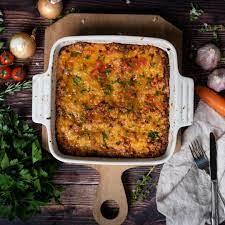
The dish is this: sliced potatoes, pan-fried lardons, onions softened in white wine and crème fraîche, all layered in a gratin dish, with a whole Reblochon rind-on-placed on top, cut-side down, and baked until the cheese melts and bubbles golden. The result is one of the most satisfying things you can put on a table on a cold evening.
Délidoor's Tartiflette brings this Alpine classic to your kitchen handmade by our chefs and snap-frozen for whenever you need it most.
Gratin Dauphinois vs Tartiflette: What's the Difference?
Gratin dauphinois is from the Dauphiné, the southern Alpine region around Grenoble, Isère and the Vercors plateau. It is older than tartiflette, simpler, and arguably more elegant: thinly sliced raw potatoes, layered and slow-baked in cream infused with garlic, at a low temperature, for a long time, until the potatoes absorb the cream completely and become impossibly tender and silky.
Tartiflette is from Savoie (north), uses Reblochon, lardons and wine, bold and hearty. Gratin dauphinois is from the Dauphiné (south), uses potatoes and cream and traditionally don't add cheese, more elegant.
Délidoor's Gratin Dauphinois is made the traditional way, potatoes, cream, garlic, patience.
Raclette and Fondue: The Art of Alpine Communal Dining
Raclette and fondue are more than dishes, they are occasions, rituals, reasons to gather. Both were designed for communal eating around a heat source, and both require patience, company, and a serious appetite.
Raclette comes from the French word racler (to scrape). A half-wheel of raclette cheese is held close to a heat source, traditionally an open fire, now a tabletop raclette machine, until the surface melts, then scraped directly onto boiled potatoes, cornichons and dried meats on your plate. You eat this in rounds, indefinitely, until no one can move.
Fondue savoyarde is Beaufort and Emmental (or Gruyère) melted together with dry white wine and a splash of kirsch in a communal pot over a low flame. Chunks of stale bread are dipped in on long forks. The rules: if you drop your bread in the pot, you buy the next bottle of wine. The tradition is taken seriously.
The Wines and Spirits of the Mountains
Savoie produces some of France's most distinctive wines, made from indigenous grape varieties rarely found elsewhere: Jacquère (light, crisp, mineral, the perfect partner for fondue), Mondeuse (a spicy, tannic red with notes of violets and pepper), and Roussette de Savoie (a rich, aromatic white). Fresh, alpine in character, and made to drink with the food of the region.
Chartreuse, the liqueur produced by Carthusian monks in the mountains near Grenoble since 1737, is made from a secret blend of 130 plants, herbs and flowers. Green Chartreuse (55% ABV) is intense and herbaceous. Yellow Chartreuse is sweeter and gentler. Both are the product of 300 years of monastic patience.